
Oil Up, Gold Down: How the Iran War Rewired Global Markets
The ongoing conflict involving Iran has triggered a sharp and unusual shift across global financial markets—flipping traditional investment patterns on their head. In just a month, assets that typically move together have diverged dramatically, leaving investors reassessing long-held assumptions.
1. Energy Takes Centre Stage
At the heart of this disruption lies crude oil. Prices have surged to multi-year highs, with Brent Crude crossing $100 per barrel and West Texas Intermediate nearing similar levels.
The primary driver? Supply shock.
The strategic Strait of Hormuz—through which a significant portion of the world's oil flows—has effectively faced closure risks. Combined with infrastructure damage across the Middle East, the result is a classic supply squeeze reminiscent of historic oil crises.
Even diplomatic efforts led by Donald Trump to de-escalate tensions have failed to calm markets. Oil traders remain focused on physical supply disruptions rather than political signaling.
2. A Hawkish Turn in Monetary Policy
Rising oil prices are not just an energy story—they're an inflation story.
Higher crude prices increase transportation and production costs globally, feeding into inflation. This has complicated the outlook for the Federal Reserve, which now appears more inclined toward maintaining—or even increasing—interest rates instead of cutting them.
This shift has ripple effects across asset classes:
- Higher rates strengthen the U.S. dollar
- Stronger dollar pressures commodities like gold
- Liquidity tightens across markets
3. Gold Loses Its Shine
Traditionally, geopolitical tensions boost safe-haven assets. But this time, Gold and Silver have disappointed.
Despite ongoing conflict, both metals have declined significantly:
- Gold ETFs down ~14%
- Silver ETFs down ~25%
Why?
- Stronger Dollar Effect – Gold and the dollar share an inverse relationship
- Rate Expectations – Higher interest rates reduce the appeal of non-yielding assets like gold
- Position Unwinding – 2025's strong rally led to profit booking
Even though gold prices remain historically high, the momentum has clearly faded.
Bitcoin: The Unexpected Survivor
Interestingly, Bitcoin has held up better than traditional safe havens.
While not rallying aggressively, Bitcoin has:
- Outperformed equities like the S&P 500
- Maintained relative stability during volatility
This signals a gradual shift in investor perception—where digital assets are increasingly seen as alternative stores of value during systemic shocks.
Winners vs Losers: A Role Reversal
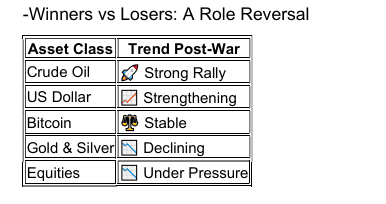
This reversal is particularly striking because it contradicts 2025 trends—where gold led and oil lagged.
What Happens Next?
Even if tensions ease and oil supply routes reopen, markets may not revert quickly.
Experts suggest:
- Oil production recovery could take 3–4 months
- Supply chain disruptions may persist
- Inflation pressures could linger
In short, the damage is already priced into the system.
Final Takeaway: A New Market Regime?
The Iran conflict has exposed a crucial insight: not all crises behave the same way in financial markets.
Instead of a typical "flight to safety," we're seeing:
- Supply-driven inflation dominating sentiment
- Monetary policy overriding safe-haven demand
- Alternative assets like crypto gaining credibility
For investors, this is a reminder that macro dynamics evolve—and strategies must evolve with them.
Disclaimer
This article is for educational and informational purposes only. It does not constitute financial advice, investment advice, or a recommendation to trade. Trading in financial markets involves substantial risk of loss and is not suitable for every investor. Always do your own research and consult with a qualified financial advisor before making any trading or investment decisions.